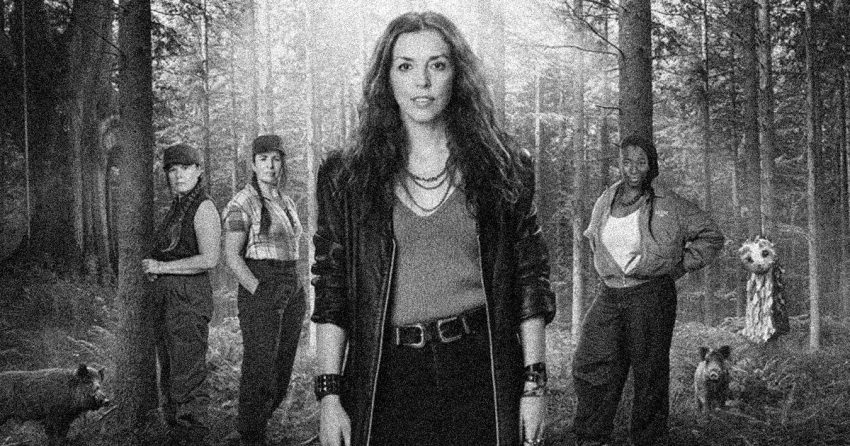
Bit late to the party on this one (I remember it being advertised but can’t believe that was June 2023) but finally got around to watching The Change, starring (and created and written by) Bridget Christie as Linda.
Hitting 50, Linda’s Doctor tells her she’s started the menopause, and having a bit of a “mid-life crisis” she gets on her motorbike, leaves her family and heads into the woods where she played as a child.
The nearby town is populated by a range of unusual characters, some of which wouldn’t be out of place in something like Wrong Turn or Texas Chainsaw Massacre, and others closer to Hot Fuzz or The Wicker Man.
Linda’s journey of discovery in the forest kind of mirrors her journey coming to terms with the menopause, and how even women aren’t really prepared for it (men certainly aren’t and I feel it’s another one of those things boys ,as well as girls, should be taught at school).
Background themes include the environment (old trees being cut down to make way for a road), feminism and men feeling emasculated (the radio presenters), loss and the freedom of finding yourself (Pigman!), all to a folksy soundtrack and odd camera effects to make things feel slightly “off” (a similar trick played by Netflix’s Sabrina series).
While light on actual “folk horror” it certainly plays into a lot of similar themes and imagery and I highly recommend it and can’t wait for the upcoming second series.
A lot of music inspires me when I’m attempting to write, obviously a lot of that is black metal, but also some ambient stuff, 80s pop and Japanese house music, amongst others.
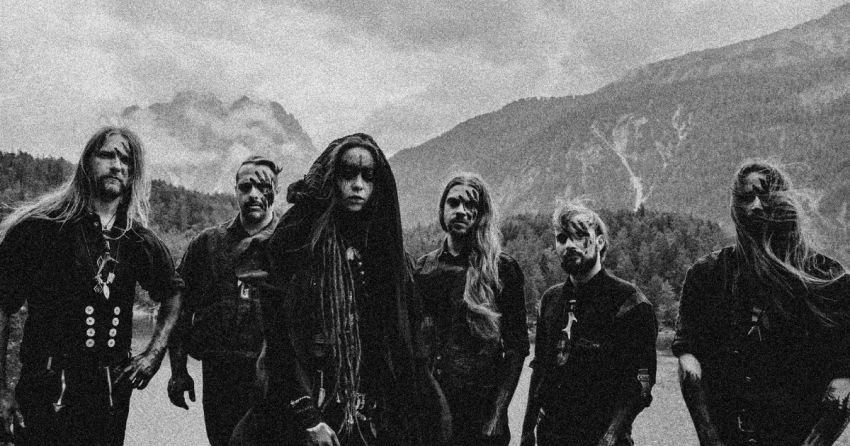
Recently I came across the Austrian folk/black-metal band Perchta and instantly fell in love with them after hearing the song “Hebamm”.
I’m a sucker for anything that mixes quiet/folk/ambient bits with the fury of black metal, such as Alcest, Wolves In The Throne Room and Myrkur, and Perchta are already right up there with the best for me.
The band have released one full length album so far, with another being released this month, from which the following song comes:
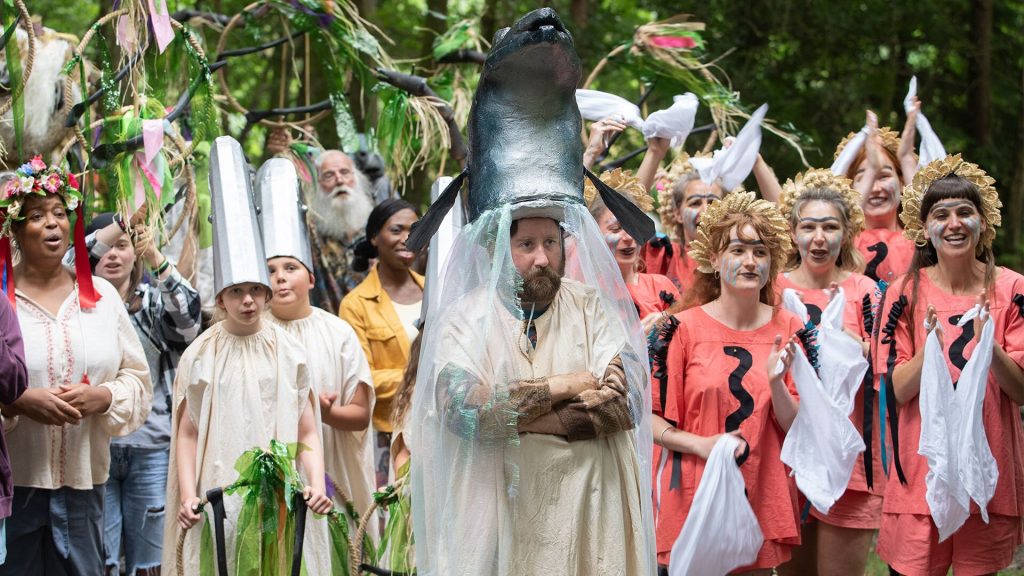
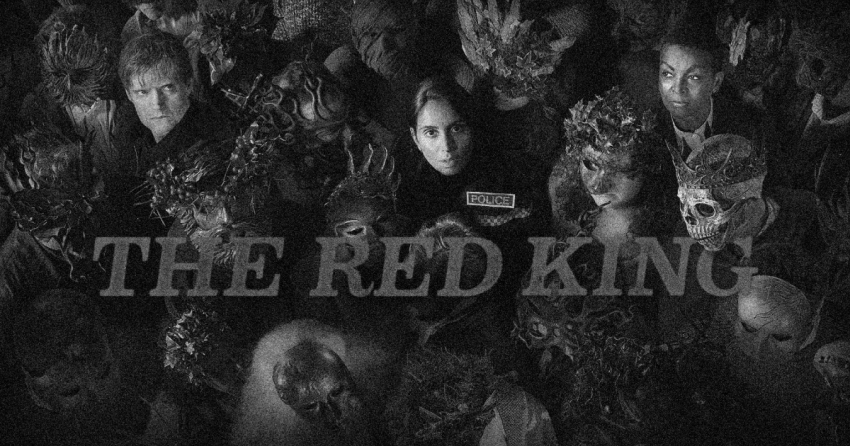
On paper The Red King sounded right up my alley. Shades of The Wicker Man (police officer on a remote island, missing child, local pagan history, a secret cult) and, of all things, Hot Fuzz (police officer sent from the city to somewhere rural as a “punishment”, trying to fit in with the locals, not understanding the local traditions, another secret cult).
In reality The Red King sadly fell very short of both of the above.
I briefly saw an advert for it before it came out and thought it looked interesting, and once released it appeared to be getting good reviews. It also kept cropping up in groups I’m part of on various social media, so I took the plunge and got a Now TV subscription and binged the series across a few nights. And I’ll be honest, I was very disappointed.
There’s a great cast in there, with some familiar faces, Adjoa Andoh (The Witcher, Bridgerton amongst many credits), Mark Lewis Jones (Star Wars, Game Of Thrones and the amazing Chernobyl) for example, but I’m not sure if it’s the script of the direction, but both actors feel like they are in a different show than the other cast members. Sometimes it was almost verging on a spoof or parody, but without actually being funny.
I stuck with it to the end, hoping the pay off involving the cult would be worth it, but (spoiler alert)… it wasn’t. The ending was hilariously ridiculous, but not in a burning a man alive or kicking a granny in the face kind of way. And that island needs better health and safety laws regarding WW2 bunkers and old mine shafts.
Somewhere in there was a great idea, but if you want to watch something about a police officer dealing with a pagan cult then stick to The Wicker Man (or even Hot Fuzz), rather than something that felt like a Channel 5 daytime drama with swearing.
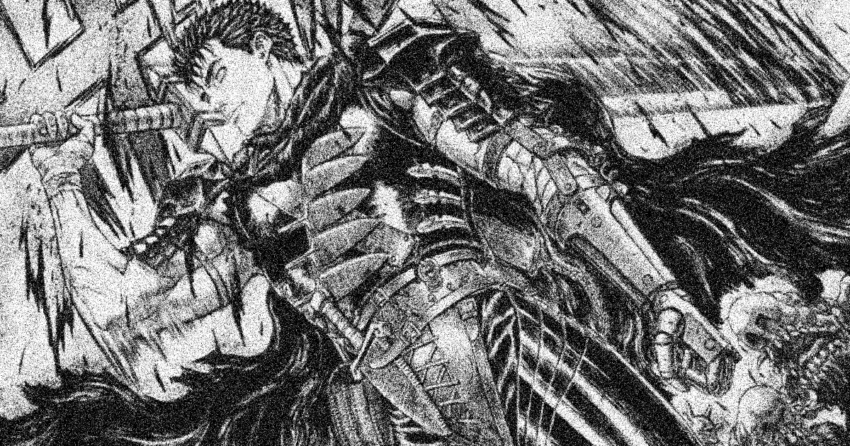
Although I’ve been a fan of anime and manga most of my life now (ever since seeing an advert for Akira on VHS in the early 90s, a whole story in itself), Berserk was something I came a bit late to.
It’s one of those titles that constantly tops “must read/see” lists, and is something I’ve always picked up in shops to look at, but as it’s always been wrapped in cellophane due to it’s graphic content I’ve always put it back down and forgot to look it up online.
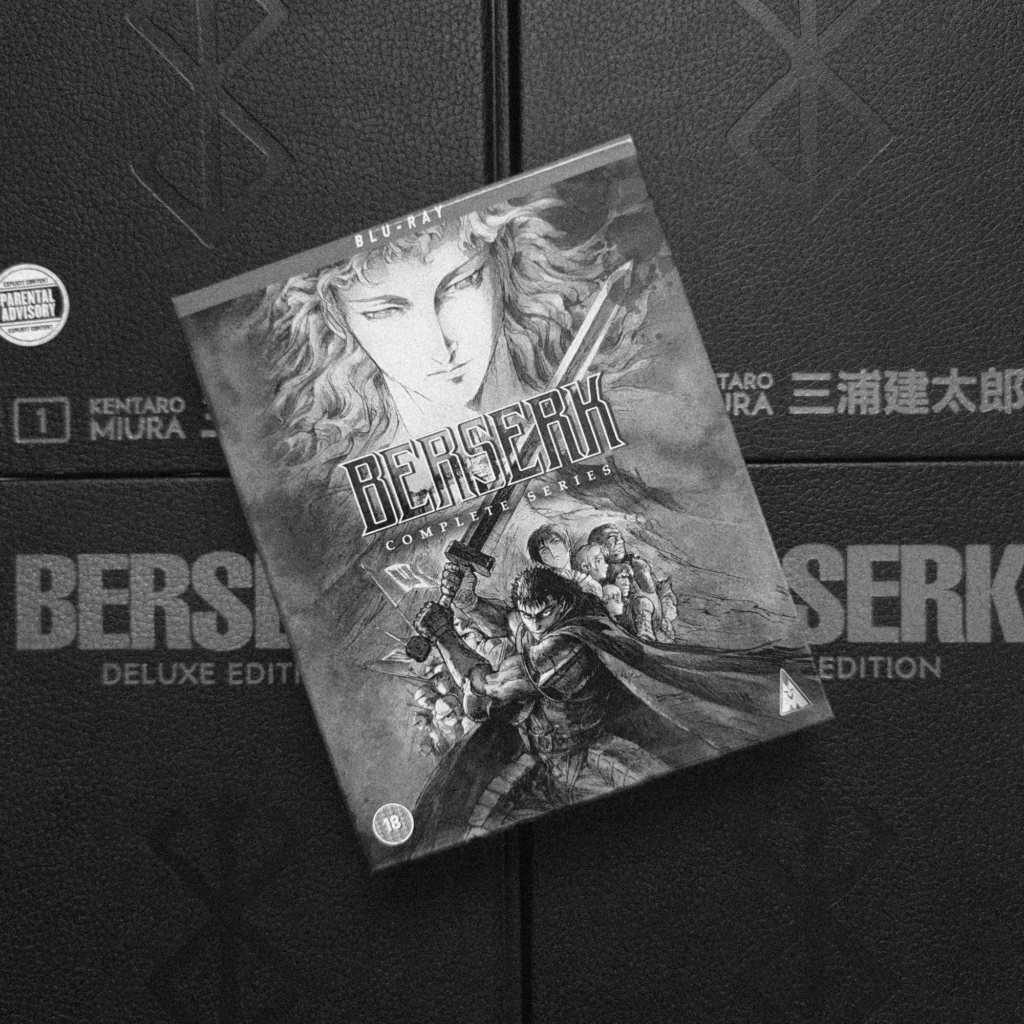
Then last year, the 1997 anime was re-released on Blu-ray here in the UK so I thought I’d finally dive into it’s world. I like a lot of modern anime, but I’ve got a big soft spot for 80’s and early 90’s stuff, and even though this was released in 1997 it has that look and feel of something much earlier (which in this case is a good thing!).
The anime ends on kind of a cliff-hanger (hard to explain without directly spoiling it), but is also one of those endings that feels satisfying to me (again, hard to explain but I won’t spoil it just yet). But I wanted to know what happens next and so looked into the films (2012-2013) and the next series from 2016, which partially re-tell the original series as well as carrying on the story further. However most online accounts agree to skip these and just go straight to the manga, which is what I did (though my curiosity means I may still end up watching the 2012 and 2016 animated versions).
As a sucker for nice, deluxe editions of things, especially books, I decided to dive straight in with the Vol 1 Deluxe Edition which collects the first 3 “tankōbon”, each of which originally collected multiple chapters of the serialised manga, in one, big, heavy hardback edition. As of writing I’m just about to start Deluxe Edition Vol 4, so no spoilers please!
Now is where I’m going to get into a few minor spoilers about the differences between the 1997 anime and the early books of the manga, and how it helped inspire certain aspects of my own work. This is your final warning…
I watched the anime after I’d already started creating my “alternate-history” England, but it influenced me to make some aspects a bit more “fantasy”-like, such as larger than life characters, castles that probably couldn’t really exist and so forth. I’m staying away from standard “fantasy” with my stories, there’s no dragons, elves or the like, focusing more on folk-horror, but I like the idea of a fantasy style world with real-world rules.
One thing that struck me about the anime (and this is more noticeable if you watch the anime first and then read the manga), is how when the anime starts there is very little in the way of magic, monsters or other fantasy tropes. At the start, Guts (the main character) fights a monstrous character, then it goes into a series long flashback that could almost be set in the real world. Knights, castles, mercenaries, big battles, kings, princesses and so on. The anime even keeps the true villain’s identity pretty well hidden until the end (I won’t spoil that, it’s a great reveal), whereas the manga starts with a lot of high-fantasy, magic, monsters and even makes it obvious who the villain is before venturing into flashback territory.
Because of the sex, nudity and graphic violence, as well as general mature storytelling, it often get’s compared to Game Of Thrones, which is no bad thing, and I’m also reminded of how the first season of Game Of Thrones was very light on fantasy (spoilers for the 3 people who’ve never watched it) with really only the opening scene of the first episode (ice zombies!) and the closing scene of the last episode (a naked woman surviving standing in a fire with her 3 baby dragons!) dipping into standard fantasy, the rest of the series basically being a re-telling of the War of the Roses.
And to bring it full circle, it was that first season of Game Of Thrones (and also a big part of the first season of House of The Dragon) that inspired me to want to write a story about knights and castles without the fantasy but also not being bogged down by historical accuracy.
As well as working on my main story (calling it a “book” sounds wrong still), I’m also working on more short stories set in the same world. These will generally be stand alone stories that link together but don’t require one to be read to understand the others.
Next up is The Badger Knight, not as cute as he may sound. More about him will be revealed gradually, but for now: He’s 6 foot 6 inches tall (and just as wide according to some), hails from the city of New Castle with a Squire from the town of Killinghall, and loves to fight. Like, really loves to fight.
This is still a work in progress so may end up changing, but here’s the opening from my next short story, The Badger Knight.
The Badger Knight
His hands covered in blood, he wrapped them around the other man’s neck, lifted him into the air and smashed his skull against the wall. Over and over and over.
The spray of blood rained down.
The bloodlust and rage had taken ahold of him and God help anyone that got in his way.
Behind the wall another man was shouting at him and pointing behind him. This man seemed familiar but his words had become just noise.
He turned around to see another man running straight at him, ready to swing a large sword. He took a step back, lifted his sword to the side and swung with all his rage, decapitating the man.
More blood rained down on him.
He turned to his right, the last two men were coming at him, side-by-side.
Idiots.
Both hands wrapped tightly around the hilt of his sword, Skysplitter, he dismembered both men at the waist in one brutal swipe. Their legs hitting the floor, closely followed by their torosos, creating an inhuman pile of limbs.
He stopped. Looked around. All the bandits were dead. The bloodlust was starting to leave him. The “playful” fights at the tourneys weren’t enough, he’d needed this. But he needed more.
He looked back at the man over the wall. His squire, clutching at his side, blood seeping between his fingers.
Look for the full short story, coming soon. Sign up to the newsletter or follow on social media to keep up to date. And if you haven’t already, check out The Knight Of Ivy, my first short story, also on this site.
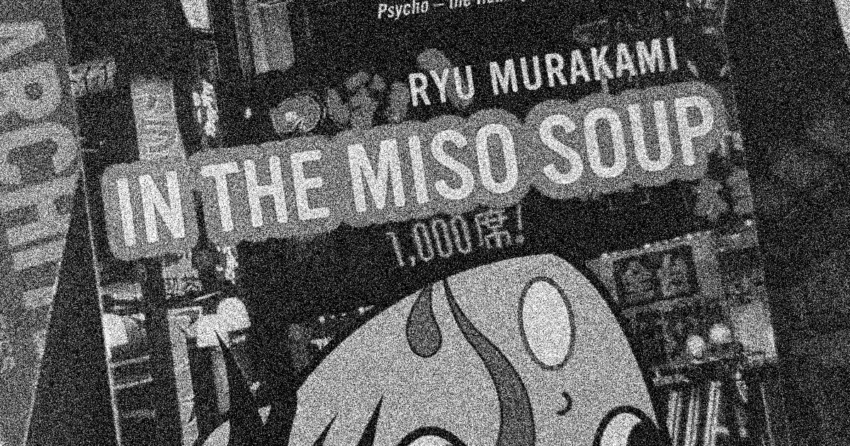
Anyone who knows this book may find it a strange choice for an “influence” for the kind of work I’m aiming for. But bear with me…
Ryu Murakami is probably best known in the west for being the writer of Audition, which was adapted into a film by Takashi Miike, released at a time when Japanese films (particularly those released by Tartan Video in the UK) were becoming hugely popular. Alongside films like Ring and Battle Royale, which I’d argue still hold up really well today (The less said about Battle Royale 2 the better).
I’ve read plenty of manga and non-fiction books from Japan over the years, but Japanese novels were something I’d never dipped into. I asked for this for Christmas in 2022, and because I’m a good boy Santa delivered!
It’s quite a short, but dense book, set over 3 days in the Shinjuku area of Tokyo (if you’ve played the Yakuza games or watched Tokyo Vice then you’ll know the area well). I won’t spoil much, but the basic plot is a first-person story about a guy who shows foreign tourists around the “entertainment” (wink wink) area of Shinjuku, and is paid for a few nights to show an American tourist around while at the same time mysterious murders are being committed.
A year after reading it I’m still not sure I enjoyed it. I liked it, but I’m not sure it’s the kind of book you “enjoy” but rather “experience”. It goes into a lot of detail about the area and how the characters react to the locations and events. But the main thing that I took from it as an influence was how it’s basically a series of conversations. Not exposition about what is happening, but just conversations that would happen (kind of) naturally.
And that’s something I’m hoping to work into my writing. Having characters just chat and (hopefully) be interesting. Not characters just explaining to each other what is happening, but talking about politics, social issues, things that interest them (and this is medieval England, it’s not going to be people chatting about TikTok or any other pop culture reference that will date things).
Scroll to the bottom to download the full story as a free PDF file.
***
Welcome traveller, welcome! Let me fill you a tankard with ale. Take the weight off your feet and grab a seat by the fire, then settle in for a tale from the Ryngwoode…
***
The Ivy Knight.
Or Knight Of Ivy.
Whatever he’s chuffing called. I can never remember. There’s hundreds of these twats going around with stupid names, hoping for their latest heroic adventure to make it into a minstrel’s song.
Okay, I’m being a little unfair here. As far as these pricks go, this one isn’t so bad. Not once you get past the arrogance.
A young knight, tournament champion, and favourite with the ladies, this is the story of Sir Denys, The Knight Of Ivy.
Or is it The Ivy Knight…?
***
Autumn was in full flow, and while the trees on the edge of the Ryngwoode were a mix of browns and reds, The Knight Of Ivy looked flourishing in green. His armour intricately etched with a pattern of green ivy, and one large metal ivy leaf emblazoned in the centre of his helmet. Along with a green cloak (patterned with gold ivy of course), it was hard not to know who he was, even from a distance.
Returning home after winning another tournament, this one in Helmsley, Sir Denys was about half a day’s horse ride from home in Knaresburgh, to the west of the Ryngwoode. His bag of winnings hung from his saddle, full of gold and a few new lady’s favours to add to his collection. The money was nice, though he didn’t need it, and so was the attention of the ladies. But the thrill of the fight along with the cheers of the crowd is what drove him.
The crowd knew he was good. He knew he was good. He didn’t need to win every event, just more than anyone else.
The Ryngwoode itself was avoided by even the bravest of knights. A huge expanse of woodland and long abandoned towns and villages, only criminals or the foolish ventured within. And those that dared and survived told stories of sights and sounds not of this earth. Like any sensible person, knight or otherwise, Sir Denys was skirting around the outskirts of the Ryngwoode, following the aptly titled Ryngwoode Road.
It was early afternoon, but he was in no rush and the weather was pleasant, and after the tournament it was nice to have some peace and calm. His squire was recovering from an illness back in Knaresburgh, so hadn’t joined him for this tournament (it’s a wonder he won anything at all with the local squire they assigned him, he thought). The road was quiet, the only noise being the wind in the trees and the soft beat of his horse’s hooves beneath him.
As the road rounded a corner he could see what appeared to be a broken cart with no horse, and he could just about make out the legs of someone propped up against the front of the cart.
Now, as much as I may mock these guys and their names, they are knights and they aren’t daft (well, not most of them). Sir Denys knew a trap when he saw one. As soon as he had his back to the woodland, tending to the ‘injured’ cart owner, he’d be rushed by bandits.
Cautiously, he dismounted from his horse and slowly entered the treeline.
The Ryngwoode stretches from the ruins of the town of Malton in the east, across to Knaresburgh in the west and up north to Helmsley. Every child in the area is told the tales of the monsters and demons that dwell within. This made it the perfect place for criminals to plot and hide. How many bandit hideaways existed within the forest was anyone’s guess.
Although he didn’t believe in the stories of monsters and demons, he knew of knights much stronger and braver than himself (not that he himself would ever admit to there being such knights) who claimed to have heard and seen things they could not explain within the Ryngewoode, who said no amount of gold would get them to venture back in. Tricks of the mind caused by shadows probably, he thought, or traps set by the bandits and reavers who called this place home to ward off anyone snooping about.
He tied his horse, Lady Baucent, carefully to an old fence post just within the treeline, out of sight, and carefully made his way towards the trees opposite the cart.
As he got closer to the damaged cart, he slowly drew his sword, preparing to surprise his would-be attackers. However, the surprise was on him.
***
For the full story, download the free PDF below (2.7mb):
The Ryngwoode is a mysterious and dangerous place that few people dare to enter. It is a vast forest that covers the area between Knaresburgh and the ruins of Malton, dotted with the ruins of settlements that were once thriving and prosperous, but were abandoned during the wars following the rebellion against Henry II. The Ryngwoode is now home to outlaws and raiders who prey on travellers and merchants. They hide in the shadows of the trees, or in the crumbling buildings that still stand on the edges of the forest.
But bandits are not the only threat in the Ryngwoode. There are also rumours of darker and more sinister creatures that lurk in the depths of the forest. Tales of demons and monsters are told to scare the children, but some swear they have seen them with their own eyes. They describe them as twisted and grotesque beings, half-human and half-animal, or worse. Some say they are the spirits of the dead, or the servants of an evil god.
Whatever they are, they are feared by all who live near the Ryngwoode. Many avoid entering the forest altogether, or only do so with great caution and preparation. Some brave souls venture into the Ryngwoode in search of treasure, adventure, or knowledge, but few return alive or sane. The Ryngwoode is a place of mystery and horror, a place where history and legend intertwine, a place where only the strong and the lucky survive.
The town of Knaresburgh sits on the river Nidd, in the north of England. It has a long and rich history, dating back to the Norman conquest and was instrumental in the rebellion against Henry II, which led to his downfall.
The castle, which sits on the edge of a cliff overlooking the river valley, is the seat of Lord Henry de Morville, one of the most powerful nobles in the area.
The lord’s son, Sir Denys de Morville – known as The Knight Of Ivy – is known for his skill in tournaments with both lance and sword.
The town is home to the Ivyguard, a group of elite knights who protect the town and the surrounding lands from invaders and outlaws.
Knaresburgh is a busy market town, where merchants and travellers come to trade and enjoy the festivals and fairs.